The Beauty of Horses: Art and Portraits Collection
“The essential joy of being with horses is that it brings us in contact with the rare elements of grace, beauty, spirit and freedom.”
Sharon Ralls Lemon.
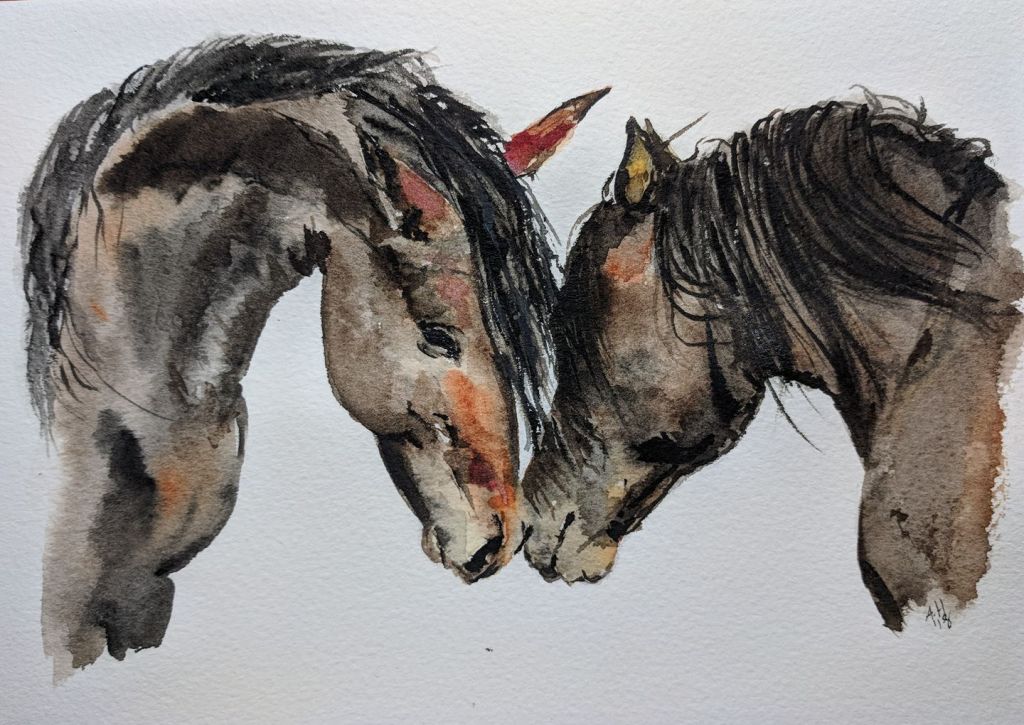
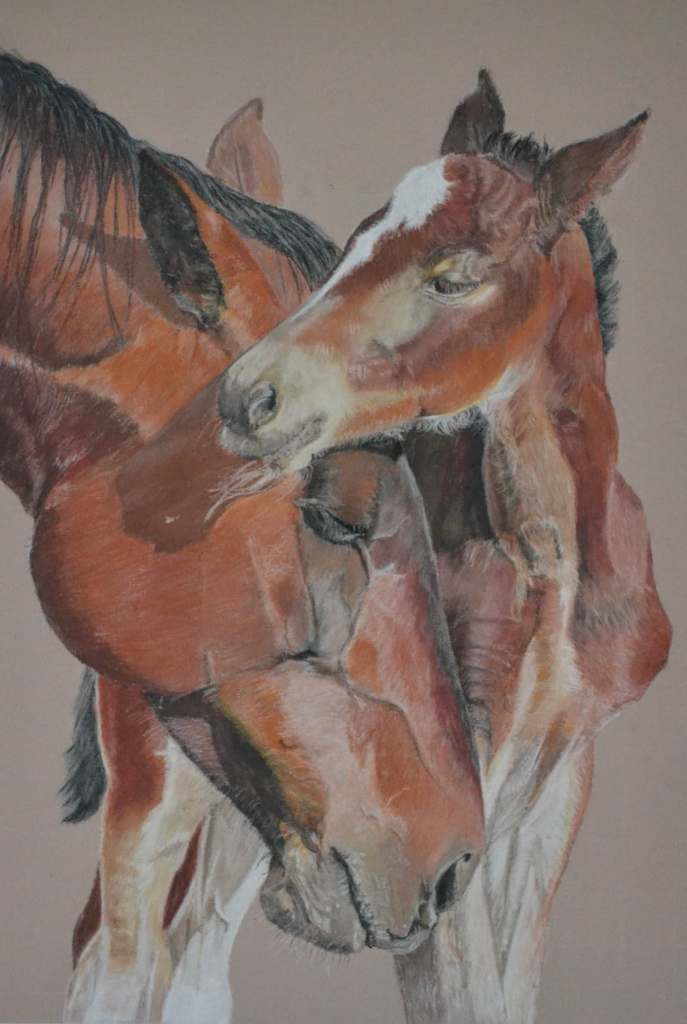
Sparring Partners
Familiarity with a subject is always an advantage when doing realistic work. I have spent the better part of my life growing up around horses on outback stations. Aside from work horses used to muster stock, we bred our own and were keen participants in horsesports. Now I live in a coastal city. This series was close to my heart and I thank my early years for the small things such as an in-depth knowledge of a horse’s muscle and bone structure, and how the hair lays on these beautiful animals.
Pastel Series
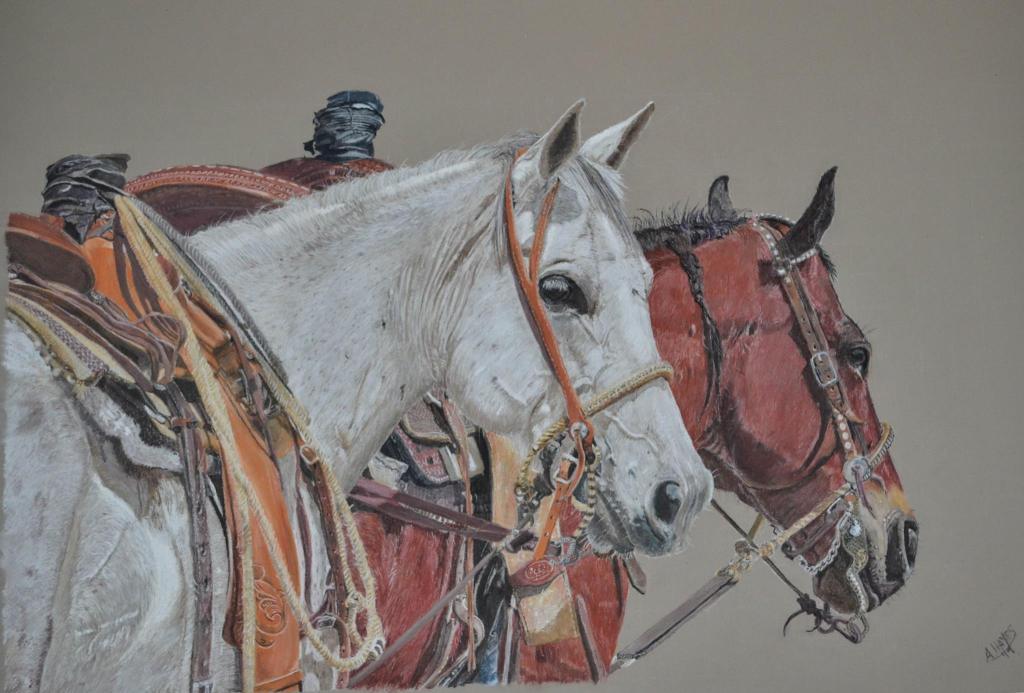
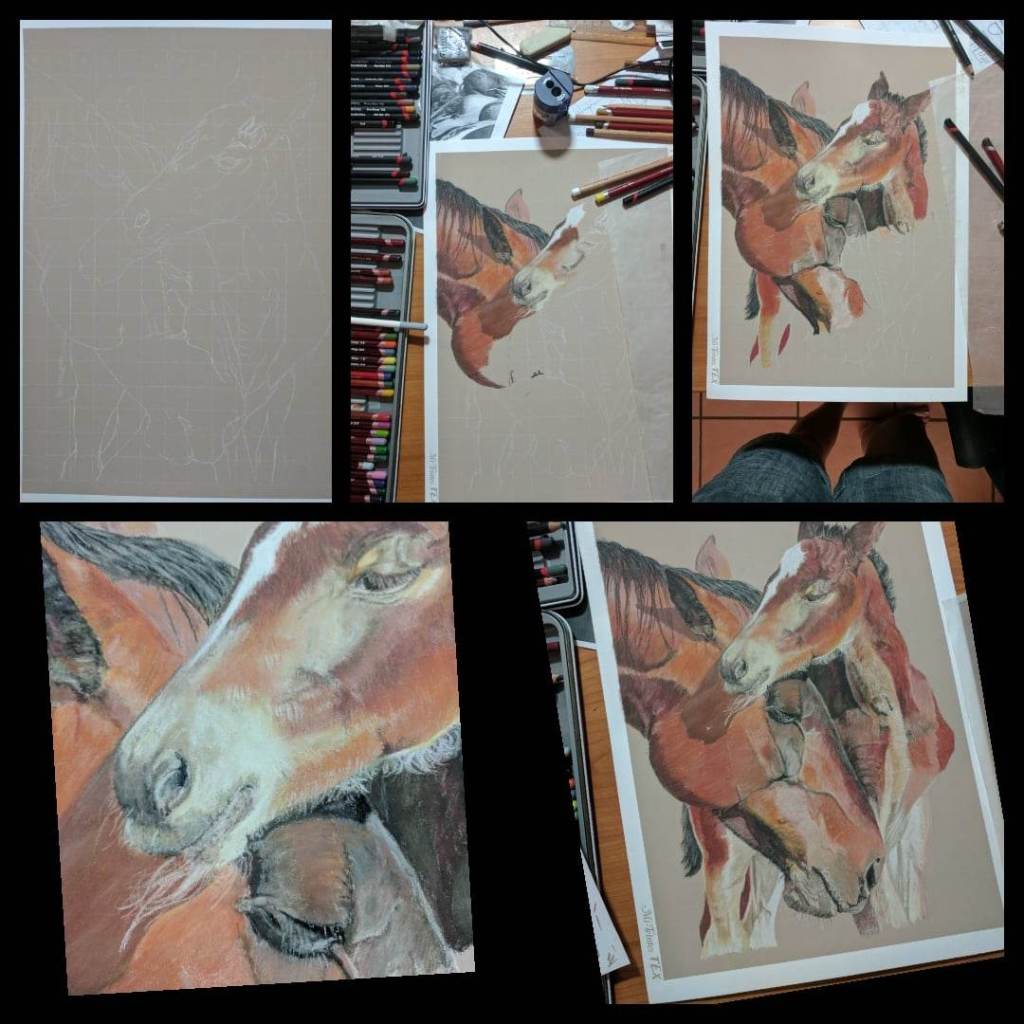
This pastel painting was my first, and I fell in love with the medium. I enjoy using heavy based papers with a coloured ground, an acrylic based primer that feels like gritty sandpaper and provides the tooth to hold the pigment dust.
Buddies
Captain
Every Moment Matters
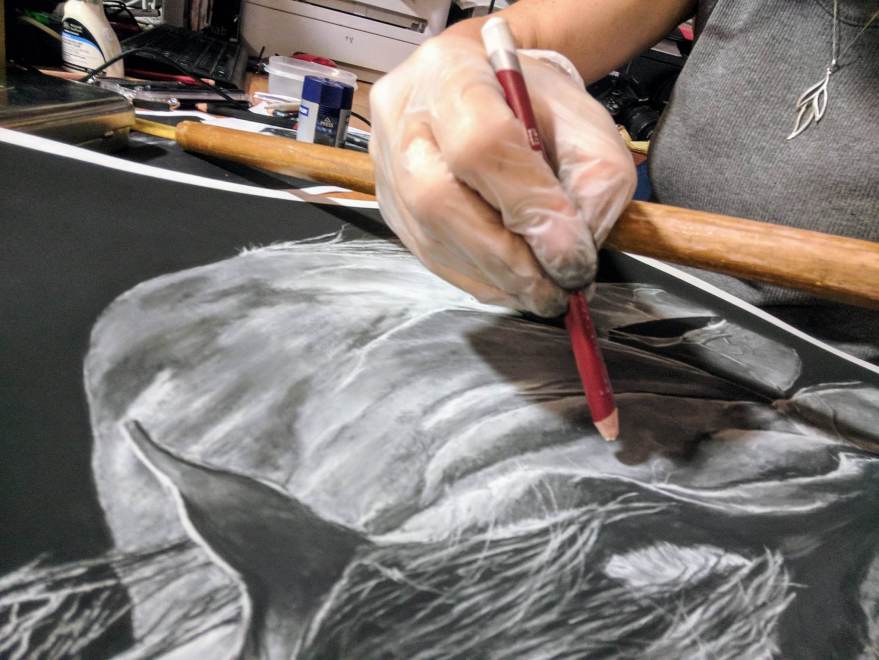
Derwernt Pastel Pencils are a favourite as are Faber-Castell’s Pitt Pastels. They are soft and buttery to work with, perfect for laying down layers, so easy to blend and apply details. The range of colours make them perfect for wildlife pastel drawings and they don’t over-clog the tooth in my papers when colours such as these bays and yellow-bays require a mixture of layering with up to four colours, to create the exact match to the reference photo.
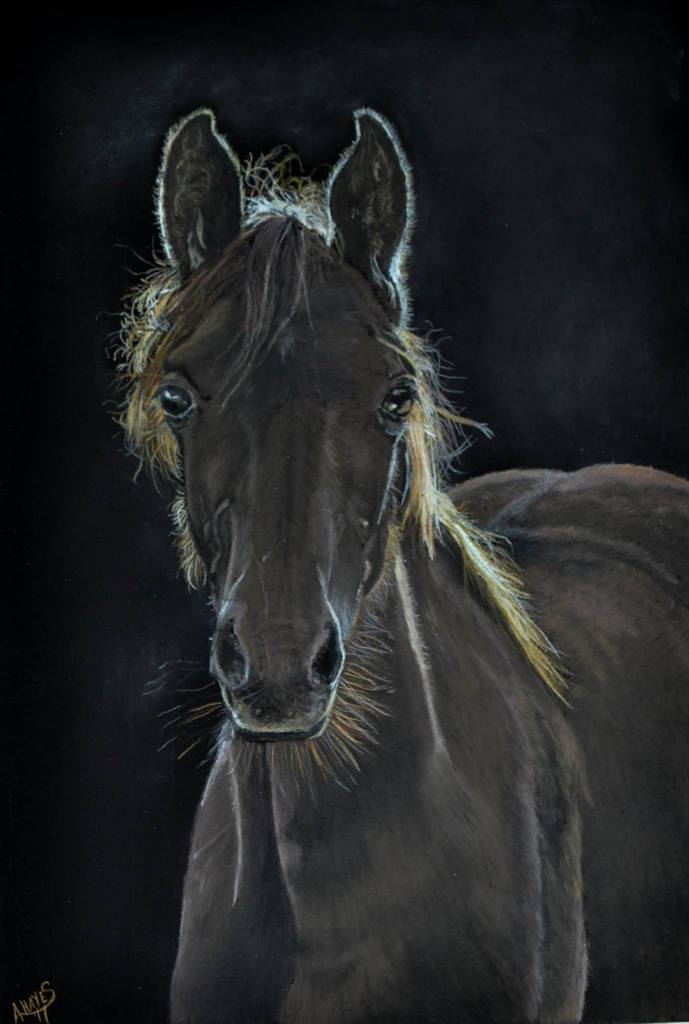
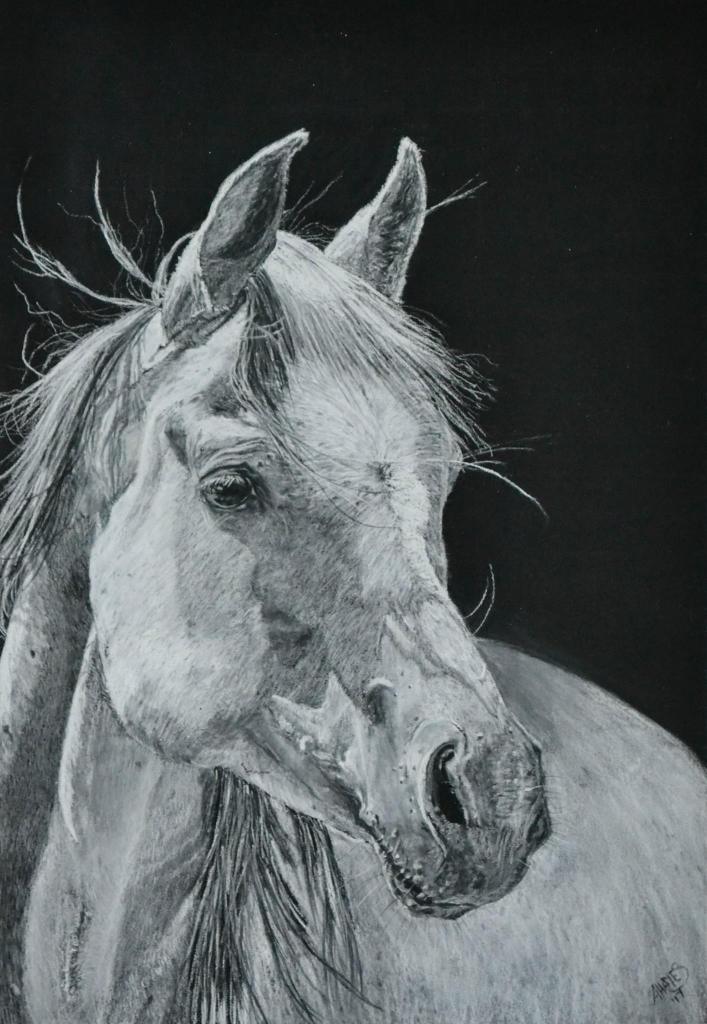
Chetak
Chetnak was a legendary Indian warrior’s steed. This little fellow had attitude plus which I’m guessing his namesake had to remain a renouned warhorse. For this I used pastel pencils and charcoal on watercolour primed pastel mat.
Charcoal Equine Series
A series of black and white charcoals works.
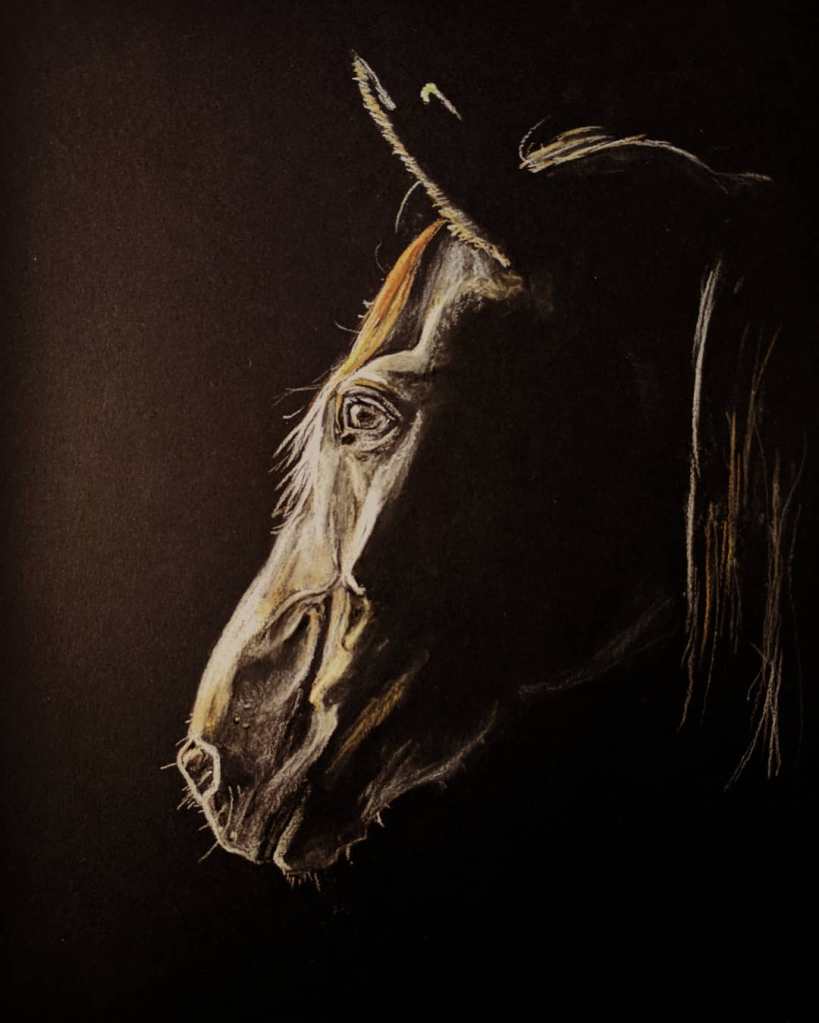
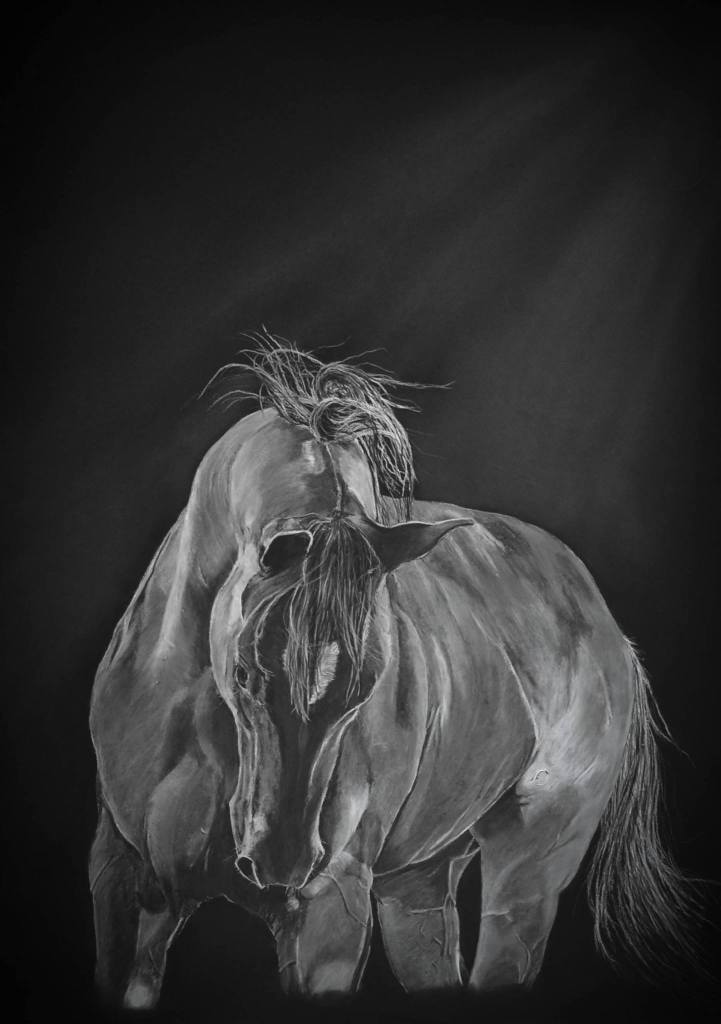
Milo
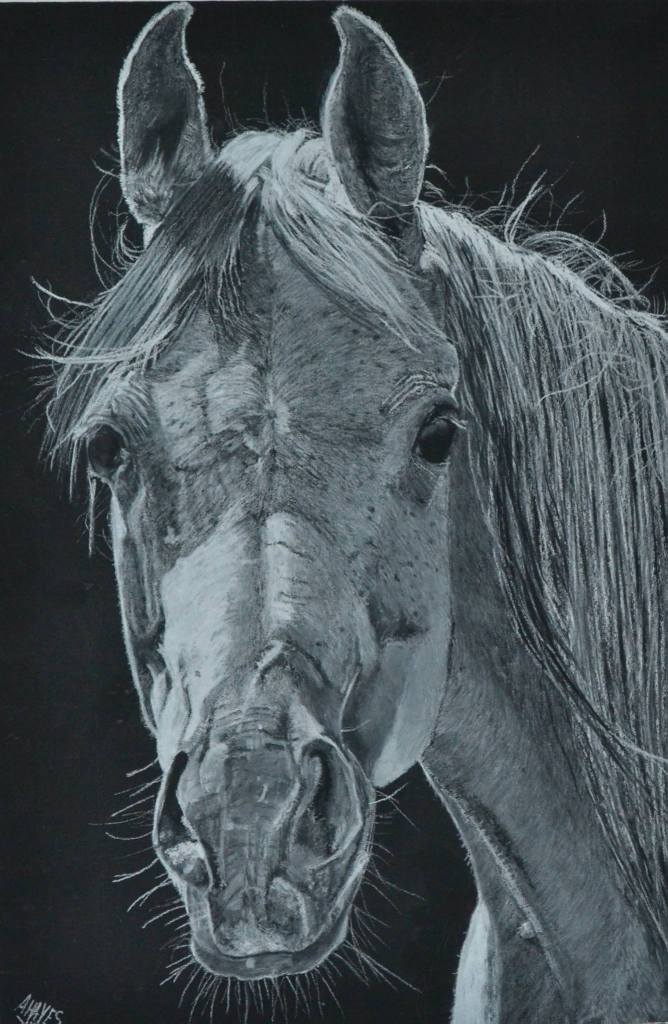
‘Milo’ is actually a glorious chestnut gelding. His charcoal portrait painting uses a combination of soft black charcoals and soft white pastels for the larger areas, and medium General’s Charcoal White pencils for the details – the latter are divine to work with – highly recommend. Here’s the debate however. While white charcoal is a legitimate Japanese product – “Binchōtan” – it is actually a light gray ash colour at most.
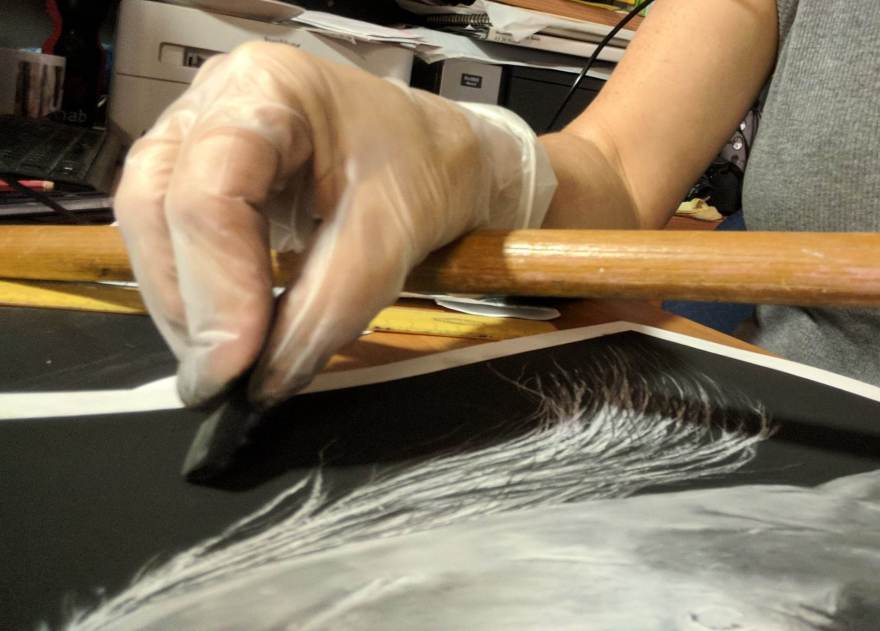
The white charcoal pencils I use are still dense and chalky but give the beautiful luminescence where needed. The lighter values were mostly created by adding the white layers directly on top of black. This is the simplest technique and interestingly creates cool tones as the whites give the charcoals a subtle blue hue. Deliscious! I used Canson Mi-Teintes paper which I mentioned in my Portraits Series. I tend to work from top right to bottom left (right-handed) to avoid smudging work and use a sheet of glassine paper to rest my arm on. Baking paper is a cheaper alternative and equally effective although I recommend using glassine paper to protect finished works. Another quick tip, rest you arm on a piece of wooden dowl for final quick touch ups to keep it raised off the paper.
 Andrea Hayes Fine Art & Illustration