“I would like to paint the way a bird sings.”
Claude Monet
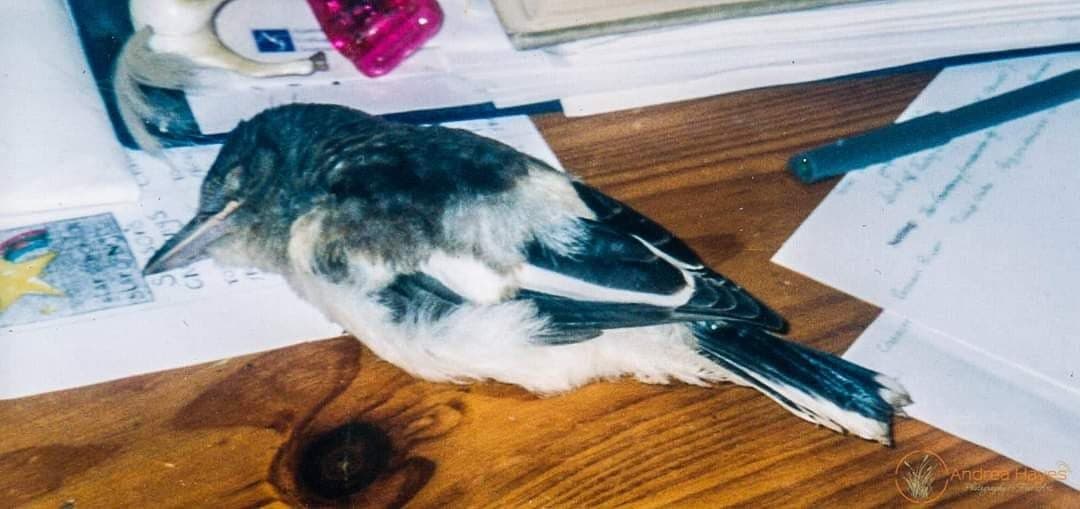
I have an enduring love for birds and have had the privilege of hand-raising many native birds to integrate back into the wild. “Bird” (below) was a Grey Butcherbird (imaginativley named by my 3 year old at the time) who spent many hours pilfering in my studio in between doing bird things, and would often collapse into a sound sleep anywhere amongst her havoc (below). Bird loved pulling the hairs from paint brushes and ‘nesting’ amongst the papers. She eventually left home and I like to think she found a mate and produced many more ‘birds’. The following series includes Detailed Watercolours (1) , and Ink Doodles (2).
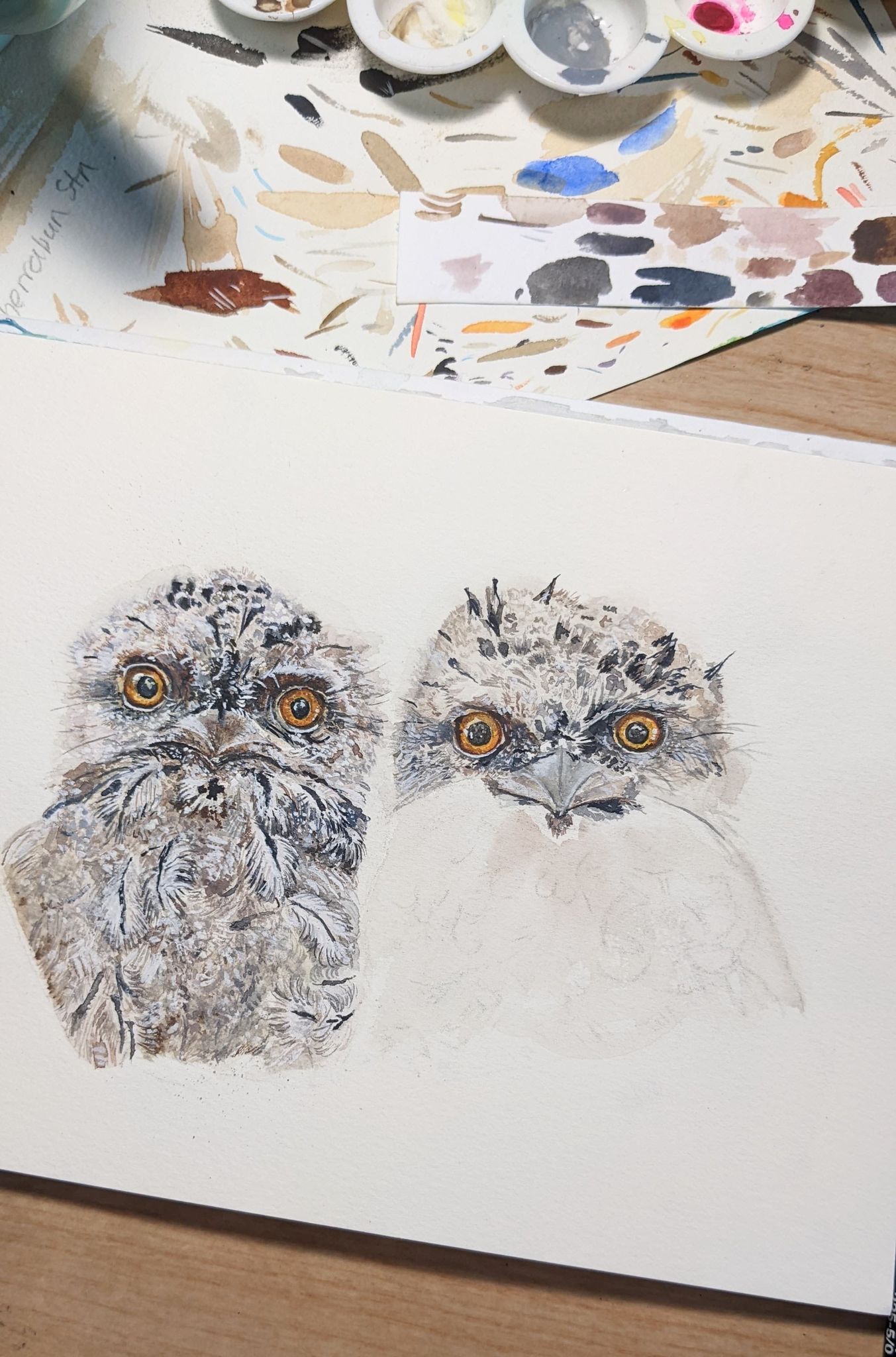
I’ve always been realism oriented in my work regardless of the medium I use, and with watercolours this means using the glazing technique of building layers to create depth. Typically I work from light to dark tones, but for the dark under feathers I build the shadows with the fine light feather details placed last. My go-to details brush is the Neef Round sable size 5/0. This super fine brush has a lovely pronounced belly that reacts well and provide incredible control.
I use smooth hot-pressed cotton watercolour papers which lend themselves best to super-fine details. While I love the medium cold-pressed papers purely because I love the textured look and my art is about enjoying the process I found it unsuitable for this level of detail.
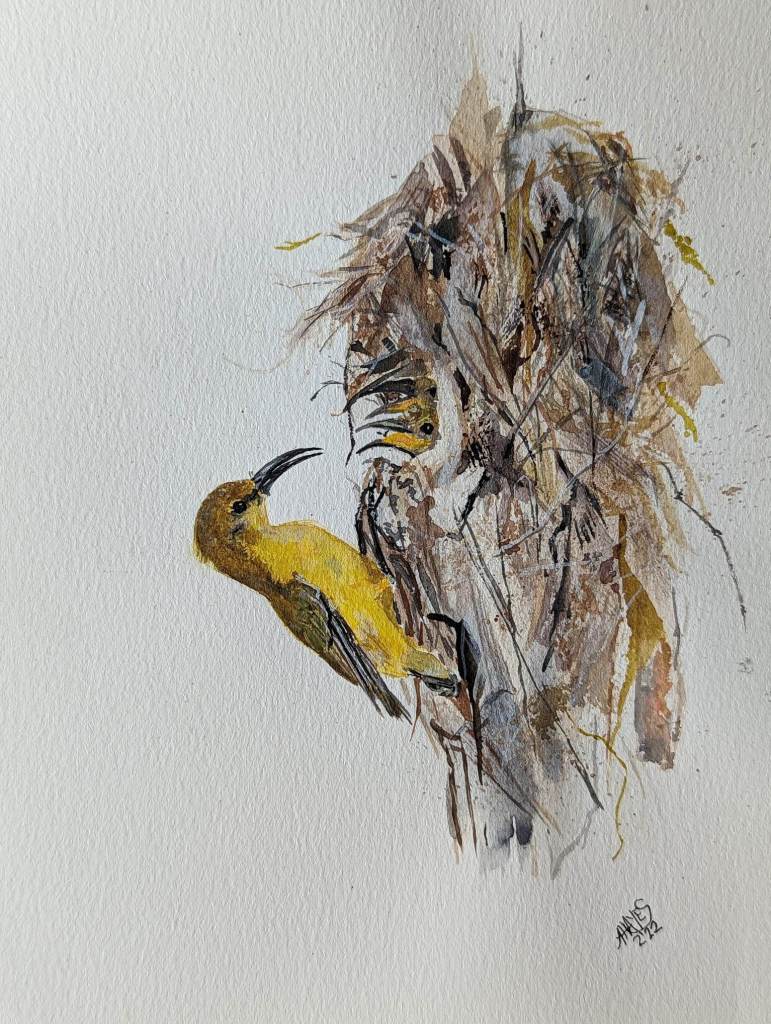
We all start somewhere. As a self taught artist I’m the first to admit that what I set out to achieve can be made exponentially harder without the right tools. This tiny Sunbird was my first realistic bird attempt, and filled with many mistakes. He is painted on cold-pressed medium textured 12.5 x 18cm paper with a 00 Neef round sable (the rolls royce of hairs) brush. I have since changed to a round Neef – sable brush, size 5/0 – this super-fine brush is almost needle-like. I’ve also changed to 21 x 29.7cm. See the difference with here and here.
KEY TAKE AWAYS – Mistakes are essential and common in the artmaking process. It lets us learn.
- Have the right sized, good quality brush
- Don’t paint in miniature when aiming for realism – it impedes the level of detail required (for feathers in this case).
- Use a smooth paper (I now use traditional white, 100% cotton hot-pressed smooth papers for fine detail pieces – love love love).
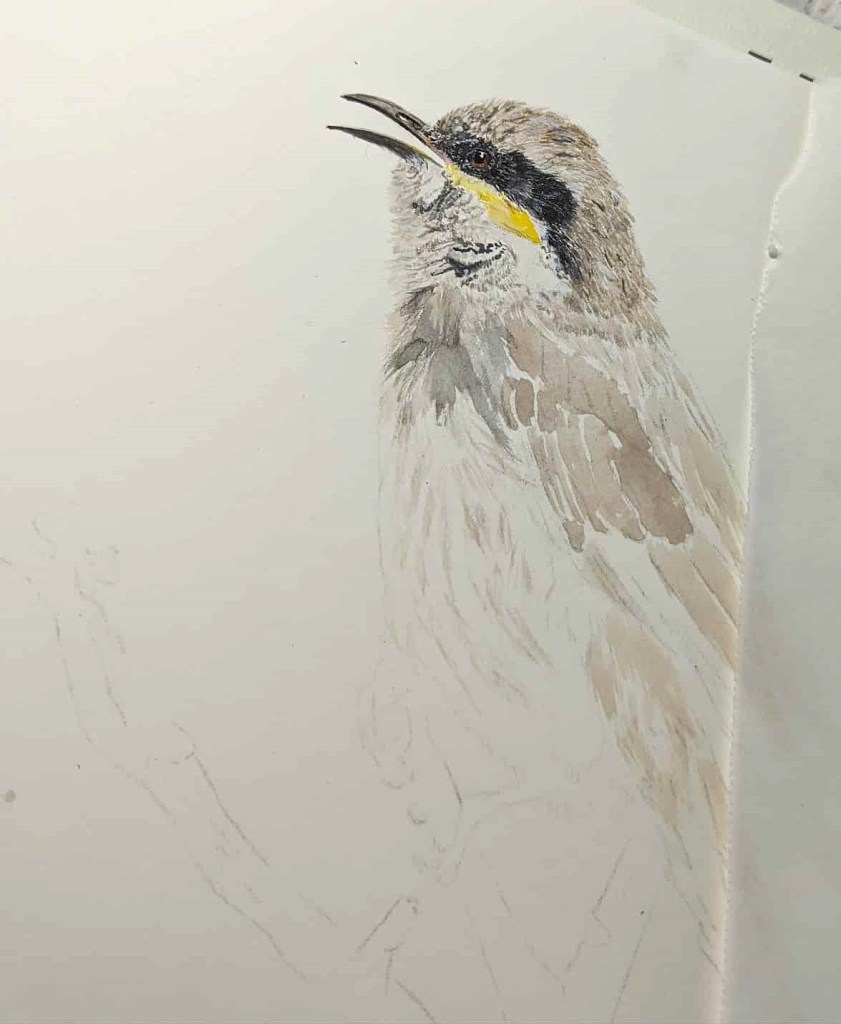
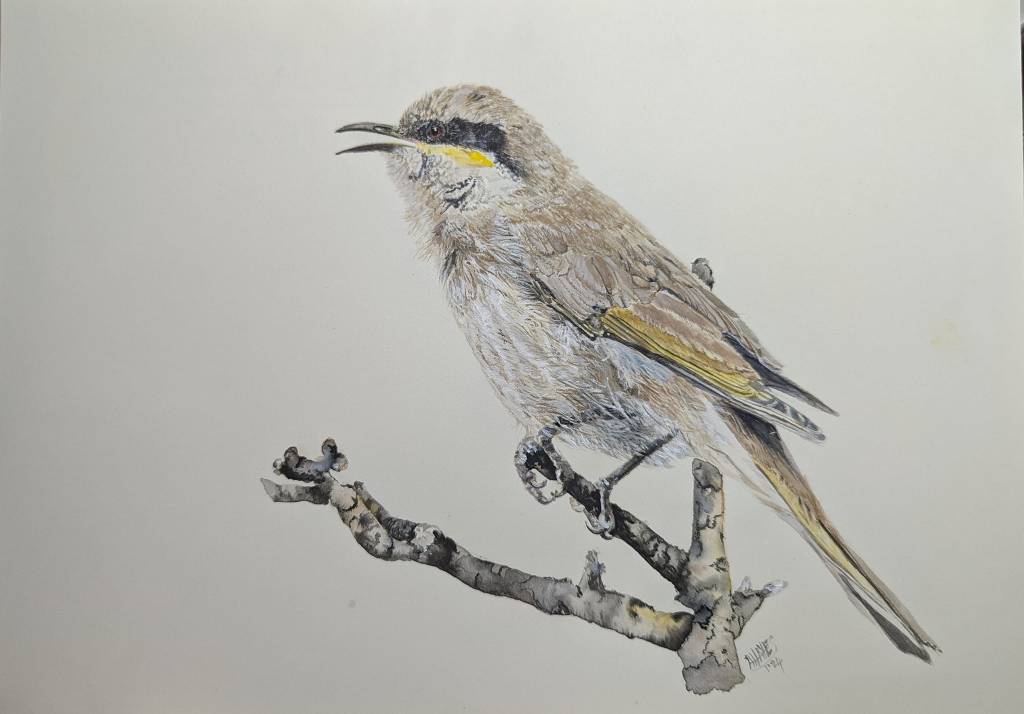
Singing Honeyeater
The Singing Honeyeater, a charming native, is the most common honeyeater in Australia thriving in both rural and urban landscapes. Their delightful dawn melodies can last up to an hour so who needs roosters crowing. Their mainland calls vary enough that studies show they don’t respond to their kin that live on islands. They also often play the role of devoted surrogate parents to the Pallid Cuckoo. I am fortunate enough to have them in my garden so had to add them to this series.
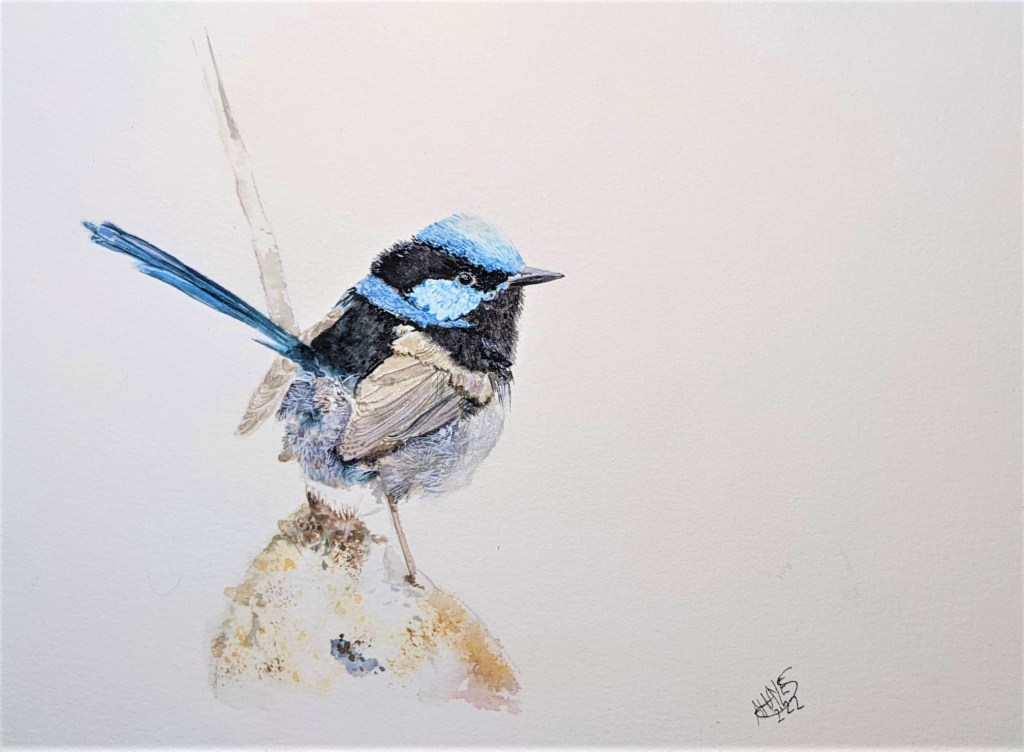
Superb Fairy Wrens
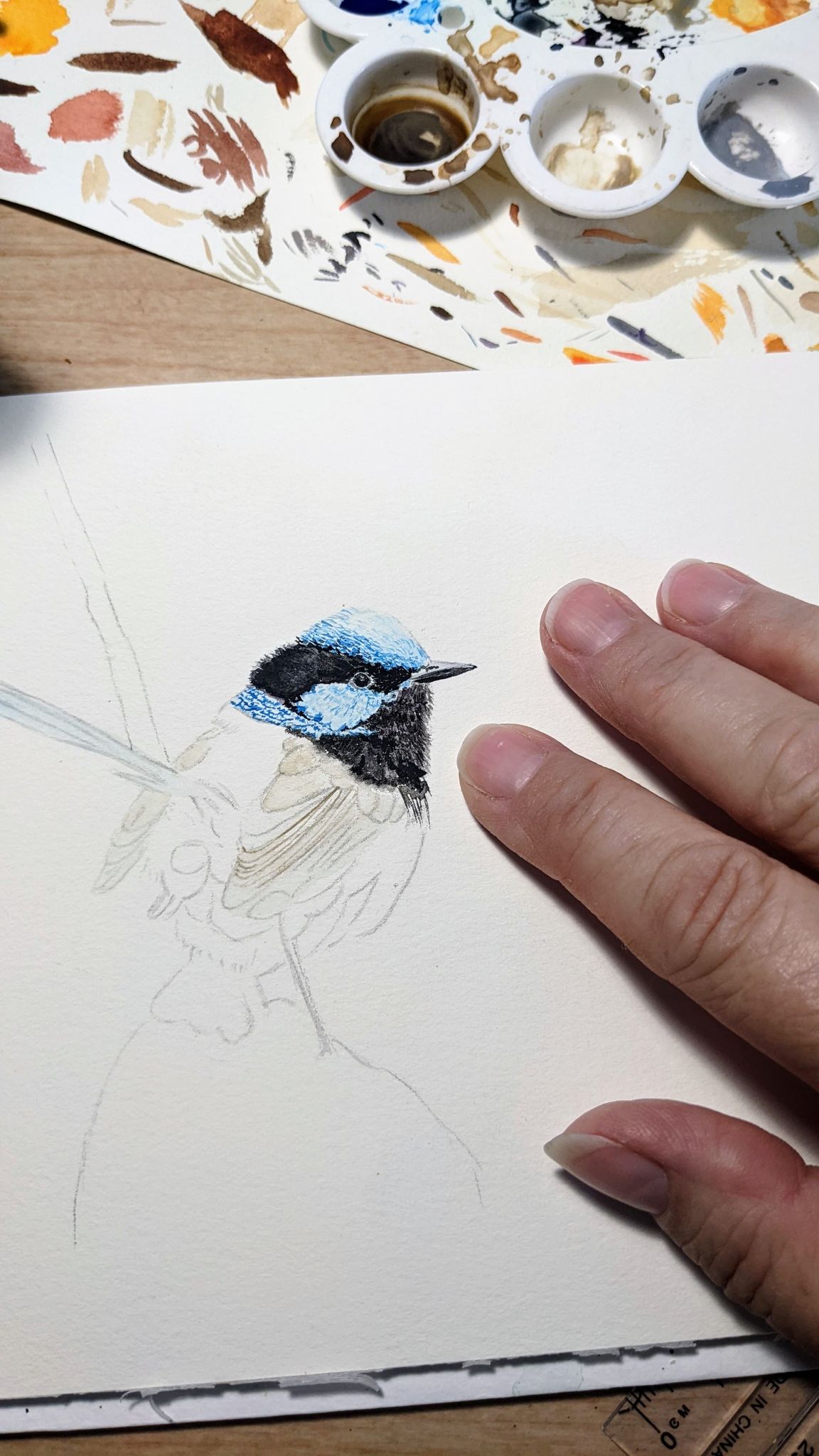
These tiny birds are spread across the Eastern Coast of Australia. Living in small parties where there are plenty of shrubs and low vegetation I have a regular family who delight my urban garden with their delicate bright little ways. A little male arrived on my balcony and inspired this illustration, and has been painted slightly larger than life.
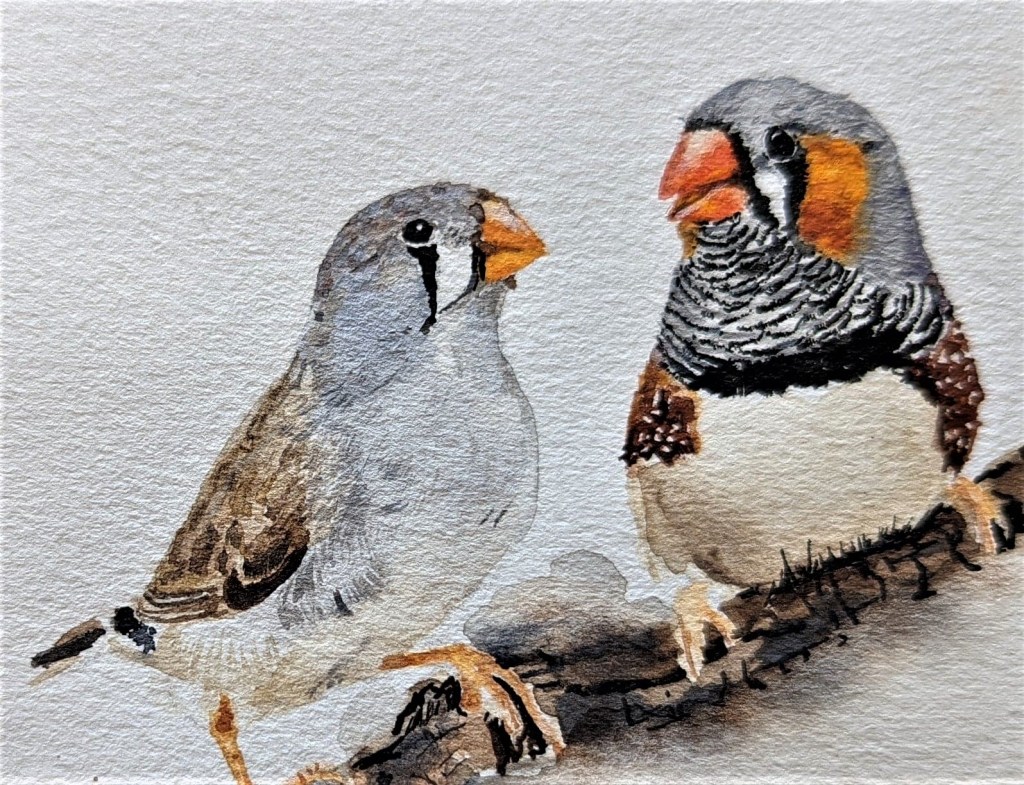
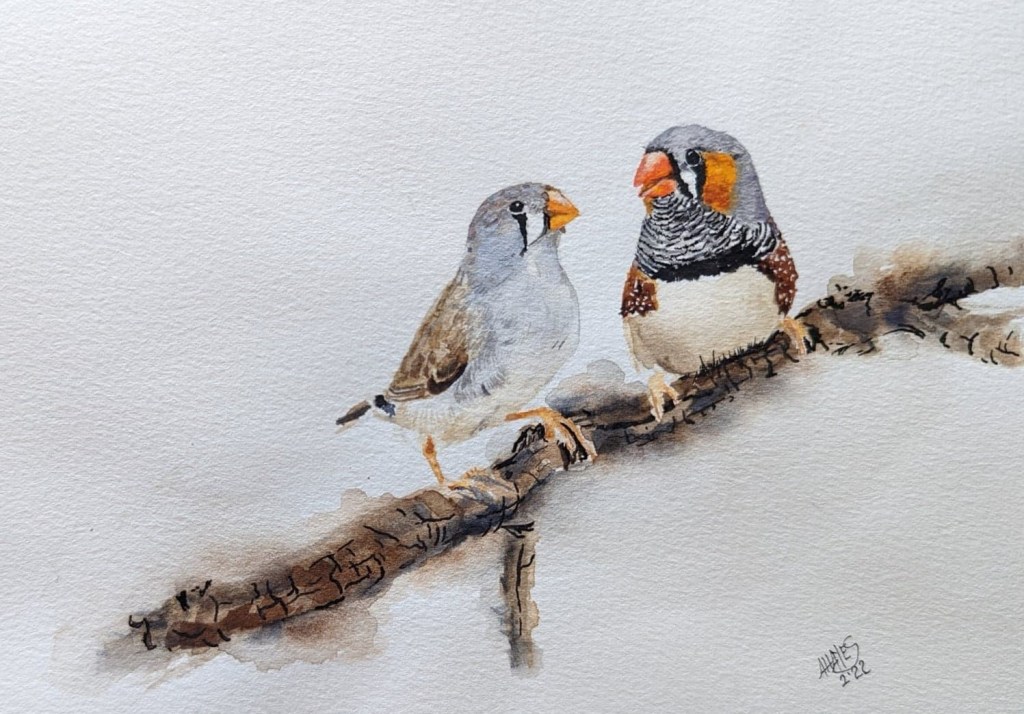
Zebra Finches
Finches are another tiny Australian bird. Double Bars frequent my yard in their busy little flocks searching for seeds however I grew up with Zebra Finches in Western Qld and will always remember their prolific nesting in prickly acacia along the bore drains across the plains country.
Yellow-tufted Honeyeater
Yellow-tufted Honeyeaters are a medium-sized native that frequents our mid to Southern Eastern coastal Eucalyptus woodlands. Another gregarious, aggressive honeyeater, its name-sake are the yellow tufts behind its ears. There are no similar species that can match its brightness. The vibrancy of the yellow in this painting does not do justice to the many layers required as watercolour yellows can be quite opaque and require some level of patience to work with.
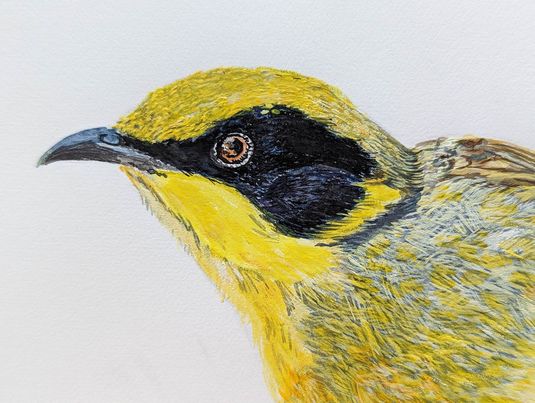
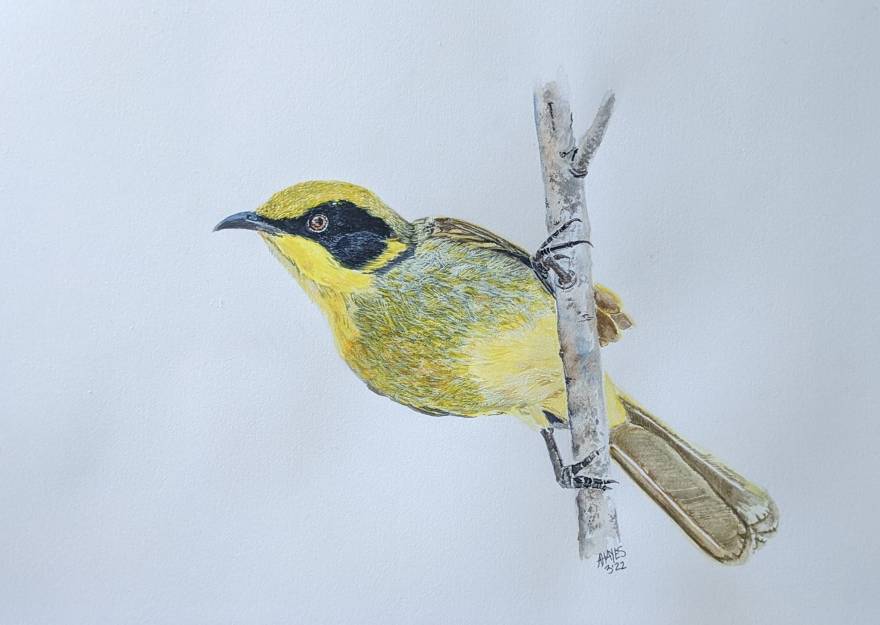
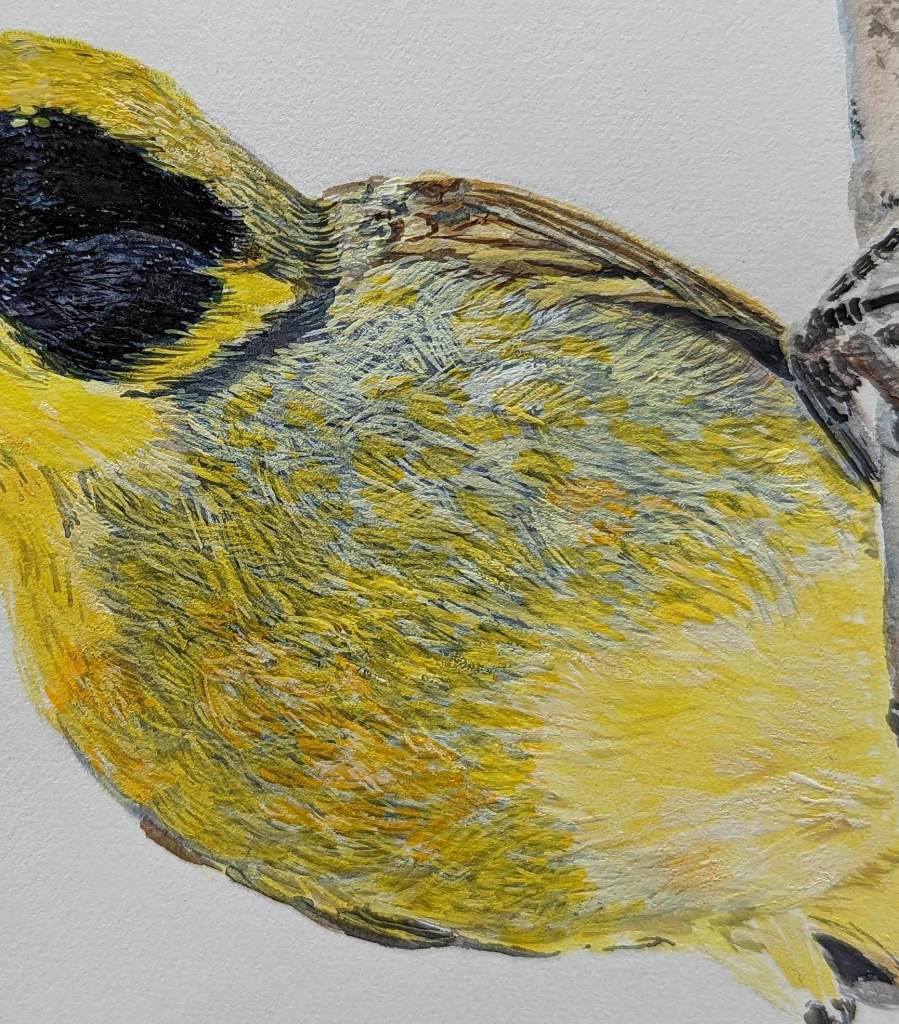
Layering is essential to build realistic depth and this guy started with a dark base layer. Feathers are made up of hundreds of tiny intricate lines and is essential for each layer to dry before applying the next or the crispness is lost to muddiness. For the lights, I used a range of yellows and white. The opacity of yellow is very difficult to build depth. The lightest colours are the last to go down.
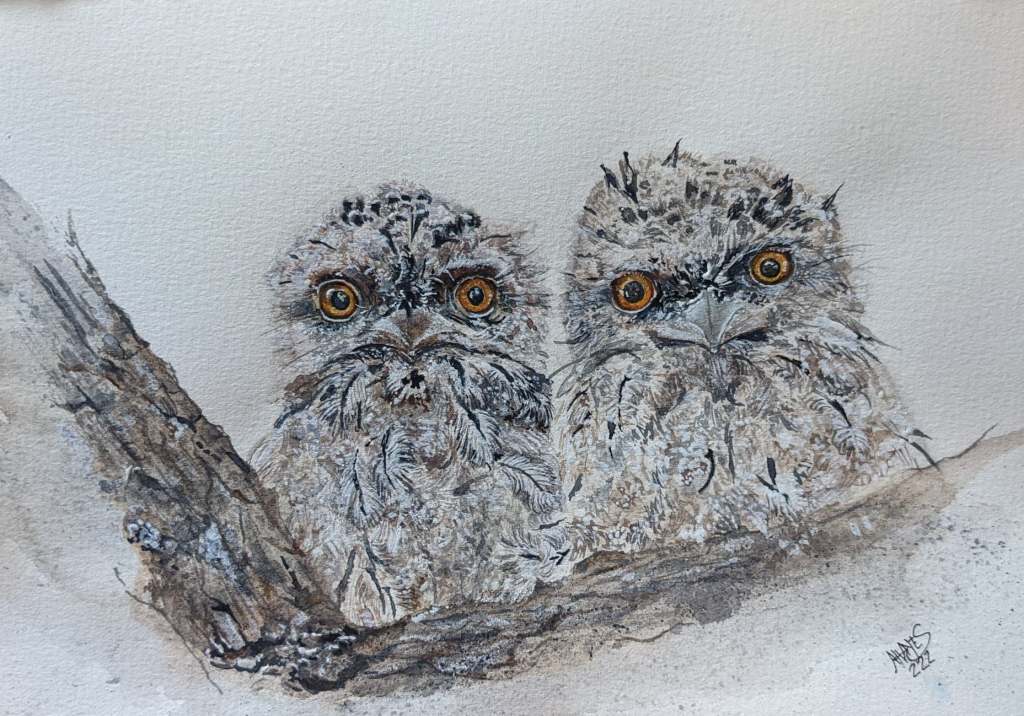
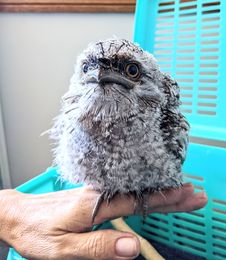
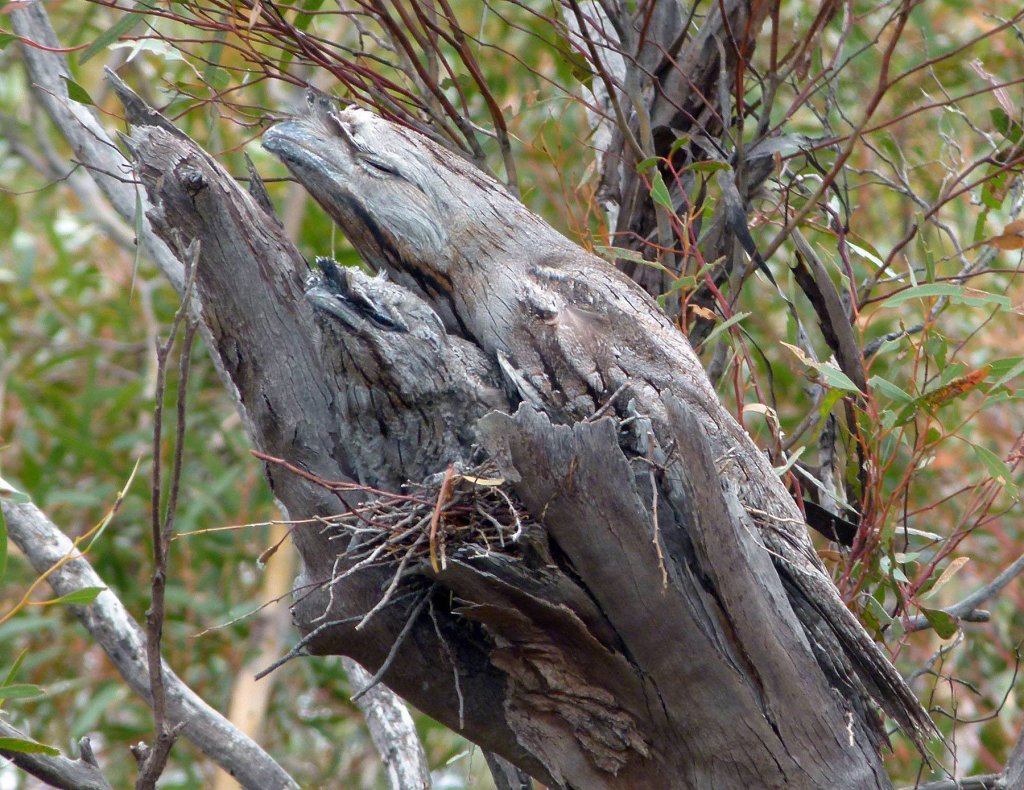
Tawny Frogmouth Owls
Meet my inspiration ‘Goober’ – an orphaned extrovert foodie with personality plus squeezed into a Tawny Frogmouth Owlet’s body! Tawny Frogmouth’s are renowned for their camoflauge poses and can be almost impossible to see. They are more closely related to nightjars than owls, lacking an owls strong talons – as seen by Goober’s long delicate toes.
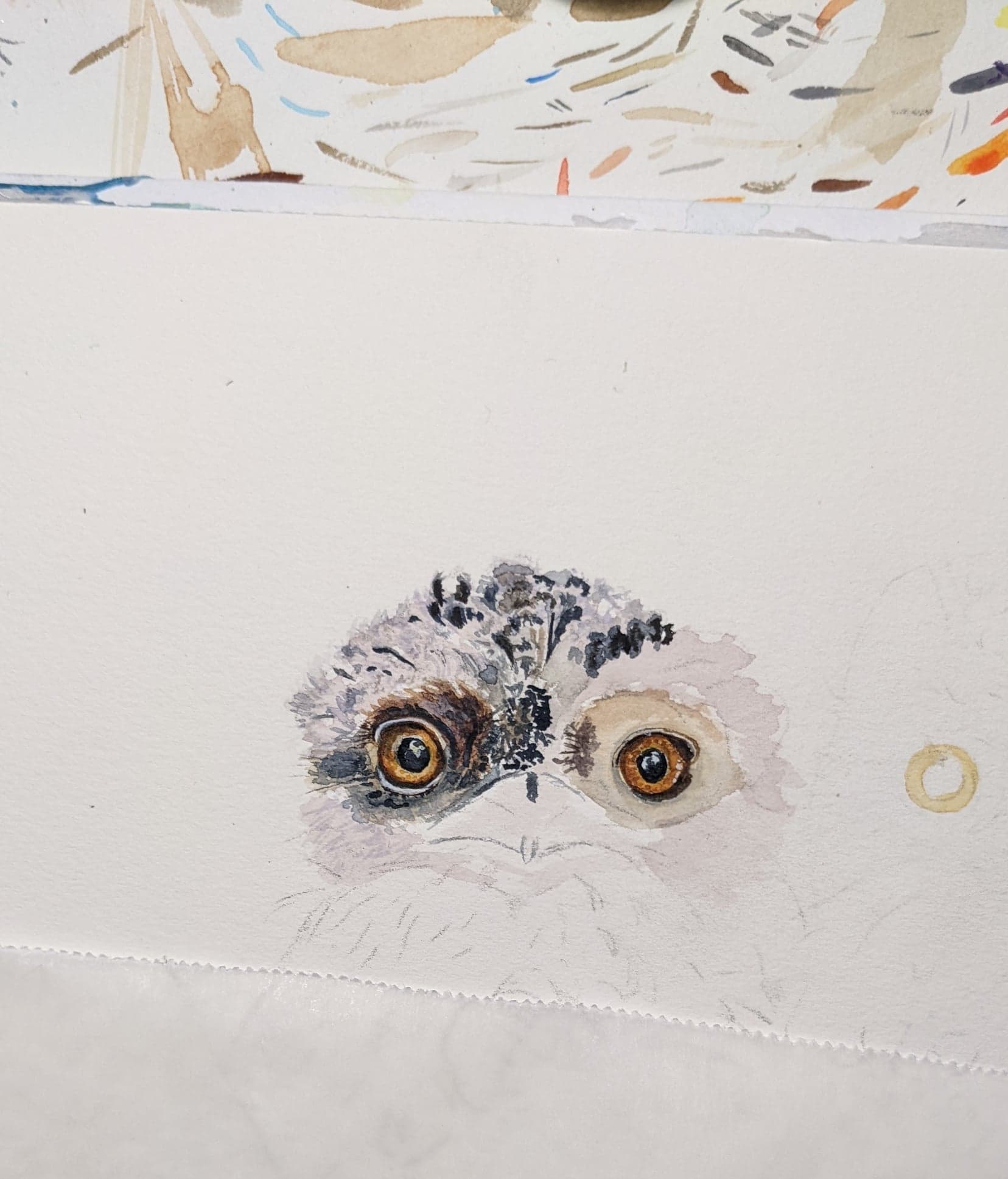
There is something extraoridarily satisfying bringing these little creatures to life, and I love to do the eye within the first session which makes the character come alive instantly.
Museums Victoria
https://collections.museumsvictoria.com.au/species/8163
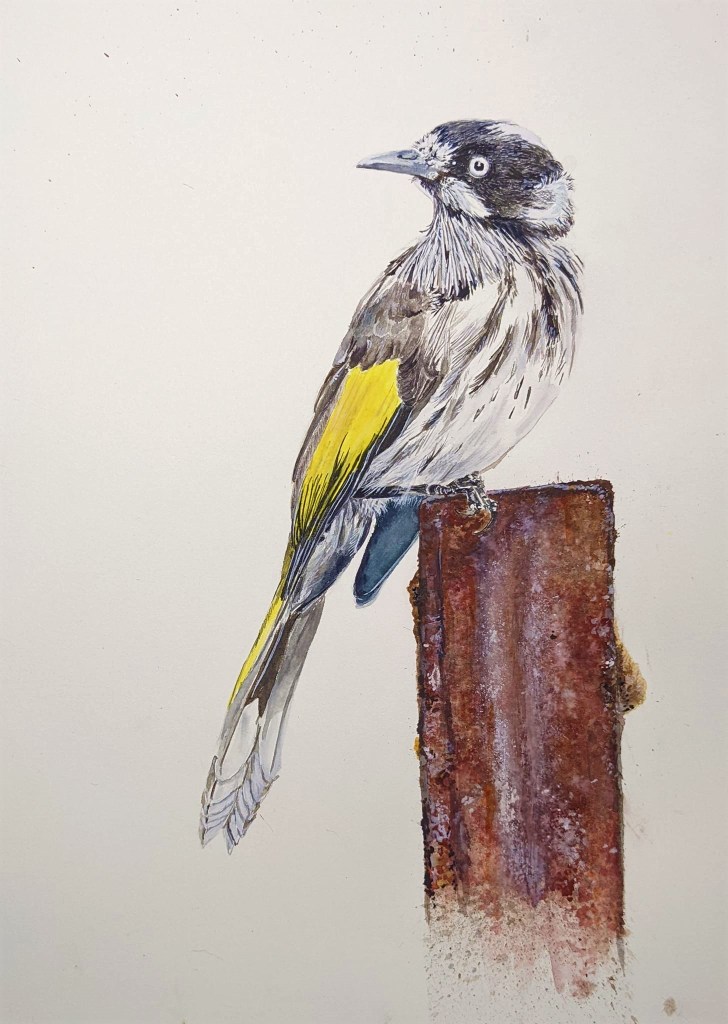
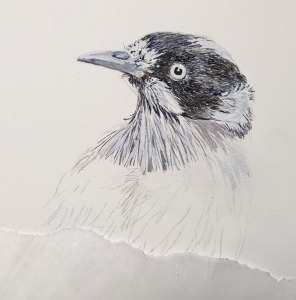
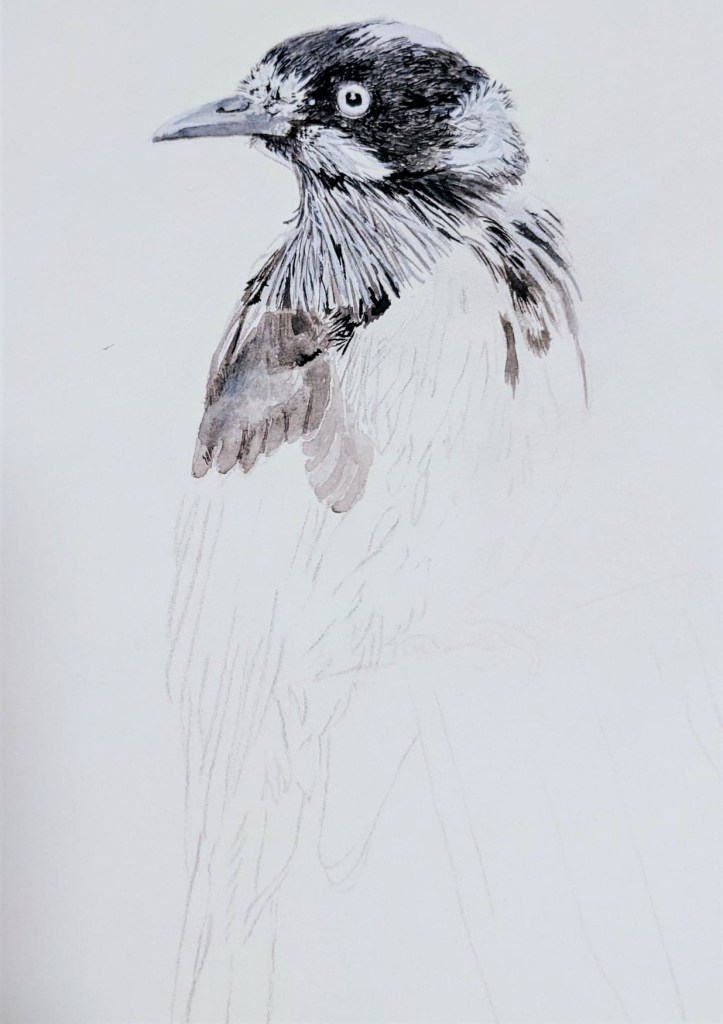
These medium-sized honeyeaters can be aggressive and have perfected the ‘mobbing” technique to drive away unwanteds. Gregarious and monogomous per season with many rounds of nesting, they are of Australia’s busiest species, with their long white whiskers being a trademark. The head feathers consist of multiple layers of fine strokes 0.5-1mmin length starting off with blue-gray tones mixing Paynes Grey and Prussian Blue. Final minimal details were added using Lamp Black which has a lovely bluish tint as do black feathers catching the light.
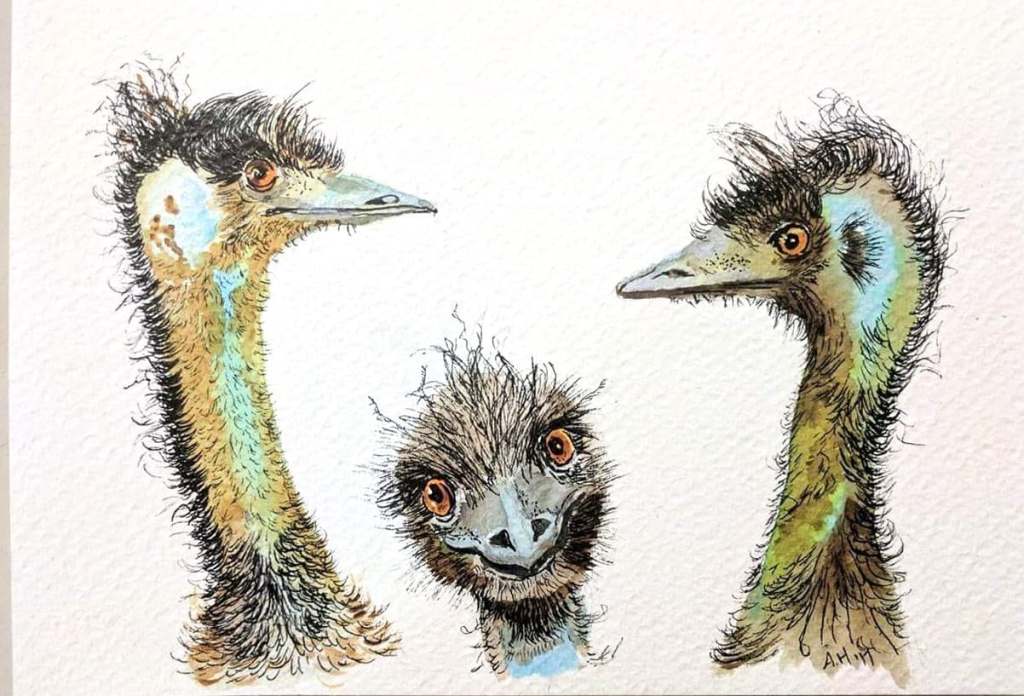
Sometimes it’s about nothing more than having some fun on a scrap piece of watercolour paper with the cartoons of the bird world – our Australian Emu.
Fun Watercolour Series
Coming soon
 Andrea Hayes Fine Art & Illustration